Careers and pay
How to become an interior designer in the UK: degrees, the Level 6 apprenticeship, BIID and SBID membership
The UK has no statutory licence for interior designers, so entry runs through university and college courses, a Level 6 apprenticeship approved in May 2026, and the membership grades of the British Institute of Interior Design (BIID) and the Society of British and International Interior Design (SBID). This article sets out each route with its entry grades, its cost and its fees.
What qualifications does an interior designer need in the UK?
An interior designer in the UK usually holds a degree, foundation degree or higher national diploma (HND) in interior design, interior architecture or spatial design, according to the National Careers Service and Prospects, but no law requires one: SBID states that the UK government has not set national competency standards for the sector, so the job title is open to anyone.
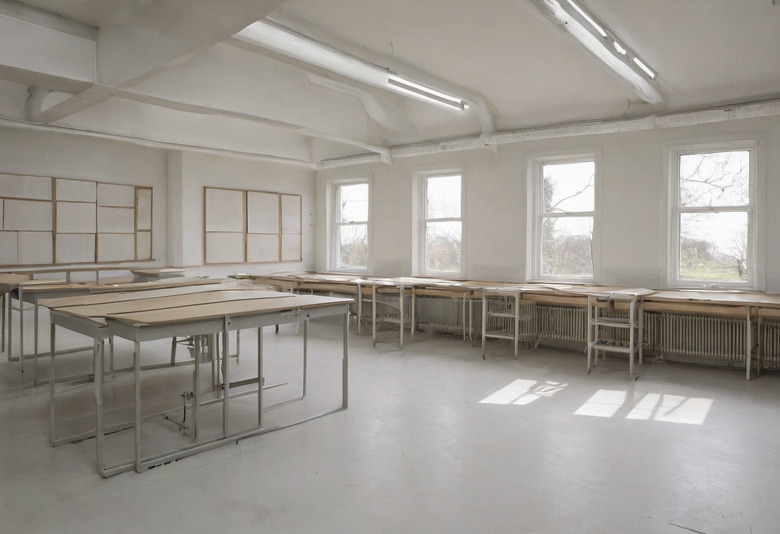
The National Careers Service lists four routes into the job: a university course, a college course, an apprenticeship, and working up from an interior design assistant post. A degree usually needs 2 to 3 A levels or equivalent, while a foundation degree or HND usually needs 1 or 2 A levels or equivalent. A college route through a T Level in Craft and Design needs 4 or 5 GCSEs at grades 9 to 4 (A* to C) including English and maths.
Prospects names interior design, interior architecture and spatial design as the preferred degree subjects, and lists 3D design, art and design, architecture, fine art, furniture design, graphic design, product design and textile design as useful alternatives. Prospects also states that entry without a degree or HND is possible with significant experience, and that SBID accredits a number of university degree courses after assessing their technical content.
| Route | Entry requirement (National Careers Service, 2026) | Typical qualification level |
|---|---|---|
| Degree at university | 2 to 3 A levels or equivalent | Level 6 |
| Foundation degree or HND | 1 or 2 A levels or equivalent | Level 5 |
| T Level in Craft and Design at college | 4 or 5 GCSEs at grades 9 to 4 including English and maths | Level 3 |
| Furniture Design Technician apprenticeship | 5 GCSEs at grades 9 to 4 useful, including English and maths | Level 3 |
| Interior Designer apprenticeship (approved May 2026) | Set by the employer once starts open | Level 6 |
| Work as a design assistant | Portfolio and employer discretion | None required |
How much does an interior design degree cost in England in 2025 and 2026?
A full-time undergraduate in England can borrow up to 9,535 pounds in tuition fees for the 2025 to 2026 academic year and up to 9,790 pounds for 2026 to 2027 through the Tuition Fee Loan, according to GOV.UK student finance, and universities set their interior design fees up to those caps.
An accelerated degree carries a higher cap of 11,440 pounds in 2025 to 2026 and 11,750 pounds in 2026 to 2027. A foundation year in a partly practical subject, which GOV.UK lists as including the creative and performing arts, can be funded up to 9,535 pounds in 2025 to 2026 and 9,790 pounds in 2026 to 2027, while a classroom-based foundation year is capped at 5,760 pounds in both years.
Living costs are covered by a separate Maintenance Loan whose maximum depends on where the student lives. GOV.UK states that the 2025 to 2026 maximum is 8,877 pounds for a student living with parents, 10,544 pounds for a student living away from home outside London, and 13,762 pounds for a student living away from home in London; the 2026 to 2027 figures rise to 9,118, 10,830 and 14,135 pounds. GOV.UK also notes that student finance changes for courses starting on or after 1 January 2027.
| Loan (England, GOV.UK) | 2025 to 2026 | 2026 to 2027 |
|---|---|---|
| Tuition Fee Loan, full-time | up to 9,535 pounds | up to 9,790 pounds |
| Tuition Fee Loan, accelerated degree | up to 11,440 pounds | up to 11,750 pounds |
| Maintenance Loan, living with parents | up to 8,877 pounds | up to 9,118 pounds |
| Maintenance Loan, away from home outside London | up to 10,544 pounds | up to 10,830 pounds |
| Maintenance Loan, away from home in London | up to 13,762 pounds | up to 14,135 pounds |
Arithmetic on those caps gives a three-year degree a maximum tuition borrowing of 28,605 pounds for a student starting in September 2025 (9,535 pounds in the first year, then two years at the 2026 to 2027 cap of 9,790 pounds, assuming that cap held), before any maintenance borrowing.
Does the UK have an interior design apprenticeship?
England approved a Level 6 Interior Designer apprenticeship standard, reference ST1361 version 2.0, for delivery on 21 May 2026, according to the Institute for Apprenticeships and Technical Education, and Level 6 is the degree-equivalent level in the English qualification framework.
Starts on the apprenticeship are not yet possible. The Institute's page states that starts will only be permitted once a suitable assessment organisation is in place, and BIID's news report of May 2026 adds that a learning provider must also be approved by Skills England before funding is released. BIID states that starts are unlikely before 2027. The employers named on the standard include SCENE, Tessuto, Lester Bennett Design Consultancy, TP Bennett, Scott Brownrigg, Jacobs, Chapman Taylor, BoConcept, MoCo, 5Plus Architects, Simon Hamilton Creative and Homebase.
Until the Level 6 route opens, the National Careers Service points to the Furniture Design Technician Level 3 Advanced Apprenticeship as a route that may lead to an interior design assistant role; 5 GCSEs at grades 9 to 4 including English and maths are listed as useful for entry.
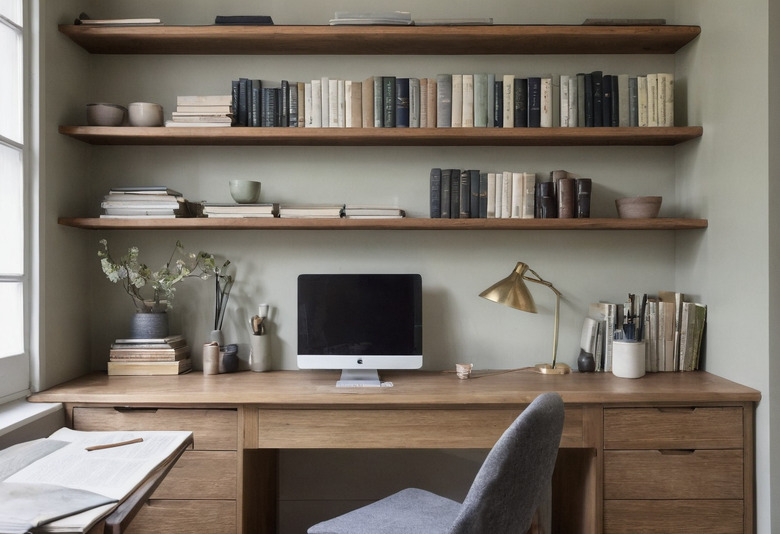
How does a designer become a BIID Registered Interior Designer?
BIID Registered Interior Designer status requires a total of 6 years of combined interior design or architecture education and interior design work experience, or a minimum of 6 years of interior design work experience, according to the BIID membership page, plus professional indemnity and public liability insurance and a Professional Review held online.
A UK-validated BA, BSc, MA or MDes in interior design, interior architecture or architecture counts as 3 of the 6 years; a UK-validated diploma, foundation degree or HND counts as 2 years. The remaining years must be interior design work experience. The Professional Review asks the applicant to evidence capability in all 8 of BIID's Core Competencies. The UK fee is 420 pounds plus VAT a year, or 35 pounds plus VAT a month, and the international fee is 378 pounds a year.
Applicants who do not yet meet the six-year test join at a lower grade. BIID Associate membership is open to graduates with a qualification at level 5 or above validated by a UK university and less than 3 years of experience (BA or MA) or less than 4 years (diploma, foundation degree or HND); the fee is 270 pounds plus VAT a year, and graduates who apply within a year of completing a UK level 5 or 6 course pay 120 pounds plus VAT for their first subscription. Provisional Associate membership is for practising designers with a level 4 or lower qualification, or none, and less than 6 years of experience; the fee is 120 pounds plus VAT a year, and after two years of work experience the member can sit an online assessment to upgrade to Associate.
What does SBID accreditation require and cost?
SBID Accredited status requires 3 years of degree-level education and 3.5 years in practice, 24 CPD points a year and professional indemnity insurance, at a fee of 395 pounds plus VAT a year, according to the SBID interior designers page, and the education years can be exchanged for an additional 3.5 years of professional practice.
SBID publishes four levels. Foundation membership, at 180 pounds plus VAT, is for a person interested in the career who does not yet hold or study a degree. Graduate membership, at 60 pounds plus VAT, requires 3 years of degree-level education and is free for students graduating from an SBID Accredited university. Associate membership, at 325 pounds plus VAT, requires 3 years of degree-level education plus 1 year in practice, or 3.5 years of practice, with the same 24 CPD points and insurance conditions as Accredited.
| Body and grade | Experience or education test | Annual fee (2026, UK) |
|---|---|---|
| BIID Registered Interior Designer | 6 years combined education and experience; degree counts 3, HND counts 2 | 420 pounds plus VAT |
| BIID Associate | Level 5 or higher UK qualification, under 3 years (degree) or under 4 years (HND) experience | 270 pounds plus VAT (120 pounds plus VAT first year for new graduates) |
| BIID Provisional Associate | Level 4 or below, or no qualification, under 6 years experience | 120 pounds plus VAT |
| SBID Accredited | 3 years degree-level education and 3.5 years practice, 24 CPD points | 395 pounds plus VAT |
| SBID Associate | 3 years education plus 1 year practice, or 3.5 years practice, 24 CPD points | 325 pounds plus VAT |
| SBID Graduate | 3 years degree-level education | 60 pounds plus VAT, free from accredited universities |
| SBID Foundation | Interest in the career, no degree | 180 pounds plus VAT |
A third route exists through the Chartered Society of Designers: Prospects states that Chartered Designer status needs a minimum of 5 years of full-time experience, a professional portfolio and a professional review.
What does an interior designer earn at each stage?
Prospects quotes junior designer salaries of 19,000 to 23,000 pounds, midweight salaries of 25,000 to 40,000 pounds and senior salaries of 50,000 to 75,000 pounds, using income data from SBID, while the National Careers Service quotes 23,000 pounds for a starter rising to 45,000 pounds for an experienced designer, both figures published in 2026.
The Office for National Statistics recorded a median gross annual pay of 34,962 pounds for interior designers (SOC 2020 code 3421) in April 2025 across 18,000 employee jobs. The full breakdown, including percentiles, hourly rates and freelance day rates, is in the companion article on interior designer salary and day rates in the UK. Prospects states that the first five to ten years of a career are typically spent building skills before a senior designer role, and that self-employment and freelance work are common.

Which steps take a graduate from a portfolio to a first job?
Competition for junior posts is strong and selection is often based on a portfolio, according to Prospects, so the practical route from a course to a job runs through work experience, professional-body student membership and software skills rather than through the degree certificate alone.
- Build a portfolio that shows a range of projects, because Prospects states that few graduates are offered work from their degree shows alone.
- Join a professional body as a student or graduate member: BIID, SBID or the Chartered Society of Designers all offer entry grades, and SBID Graduate membership is free for students from SBID Accredited universities.
- Enter competitions such as the annual BIID Student Design Challenge, which Prospects lists as aimed at final-year students of interior design and interior architecture.
- Learn the software that job adverts ask for; Prospects names AutoCAD, Adobe Photoshop and InDesign, SketchUp and 3D Studio.
- Hold a driving licence, which Prospects states is usually needed to visit project sites.
- Search the BIID jobs board and Dezeen Jobs, and specialist recruiters such as Careers in Design, which Prospects lists as the main vacancy sources.
Once in practice, the fee models a designer will be asked to quote are explained in the article on what an interior designer costs in the UK, and the health and safety duties a designer takes on for a homeowner are set out in the article on CDM 2015 for domestic clients. BIID lists free legal, HR and CDM helplines among the benefits of Registered and Associate membership.
Questions readers ask about becoming an interior designer in the uk
Do interior designers in the UK need a licence?
No. The UK government has not set national competency standards for interior design, according to SBID, so the title is not protected. BIID Registered Interior Designer status and SBID Accredited status are voluntary professional marks, not licences.
What A levels are needed for an interior design degree?
The National Careers Service states that a degree usually needs 2 to 3 A levels or equivalent, and a foundation degree or higher national diploma usually needs 1 or 2 A levels or equivalent. A T Level in Craft and Design needs 4 or 5 GCSEs at grades 9 to 4 including English and maths.
How much does an interior design degree cost in England?
The Tuition Fee Loan for a full-time student in England covers up to 9,535 pounds for the 2025 to 2026 academic year and up to 9,790 pounds for 2026 to 2027, according to GOV.UK. Universities set fees up to those caps.
Is there an interior design apprenticeship in England?
The Level 6 Interior Designer apprenticeship standard, reference ST1361 version 2.0, was approved for delivery on 21 May 2026. Starts depend on a training provider and an end-point assessment organisation being approved, and BIID states that starts are unlikely before 2027.
How many years of experience does BIID Registered Interior Designer status need?
BIID requires 6 years of combined interior design or architecture education and interior design work experience, or 6 years of work experience alone. A UK-validated BA, BSc, MA or MDes counts as 3 of those years and a diploma, foundation degree or HND counts as 2.
What does SBID Accredited membership cost?
SBID lists Accredited membership at 395 pounds plus VAT a year, Associate at 325 pounds plus VAT, Graduate at 60 pounds plus VAT and Foundation at 180 pounds plus VAT, as published on the SBID interior designers accreditation page in 2026.